How can I change the culture in my team or organisation?
Culture changes when power dynamics change. When an individual changes how they use their power, it can make some difference. Yet real culture change happens when teams of people learn to change how they work together - as leaders and colleagues. The H.U.M.A.N Culture Change Compass™ is a practical approach for transforming workplace culture by changing how people behave, relate and use power day to day. Used by teams of all sizes and types, it’s tailored for your context.
This is not a quick-fix or easy set of simple steps. It’s a transformative, practical approach that a team undertakes together, leading to deep, sustainable change.
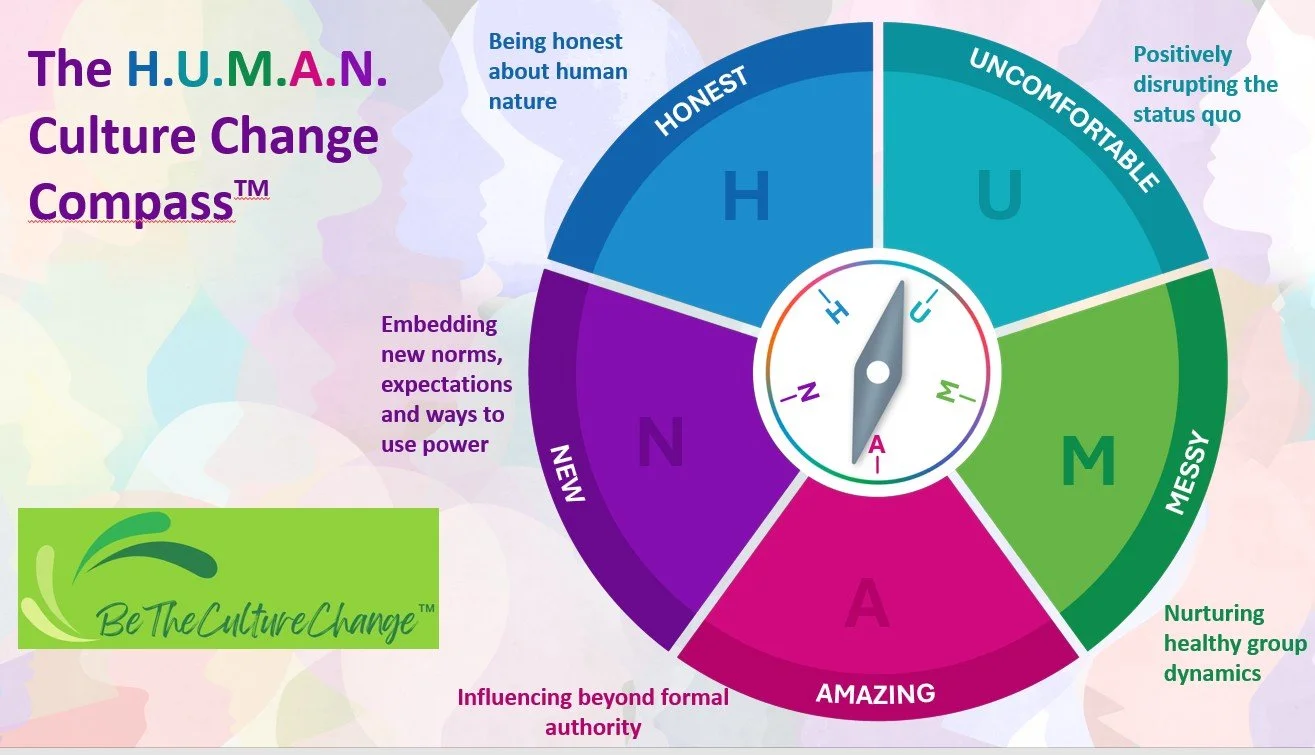
The 5 core shifts are:
H - Honest: Recognising how well-intentioned behaviour can still create harm at work, and learning how to prevent or repair this
U - Uncomfortable: Learning the skills to stay in the discomfort of having candid conversations with care, rather than arguing or avoiding
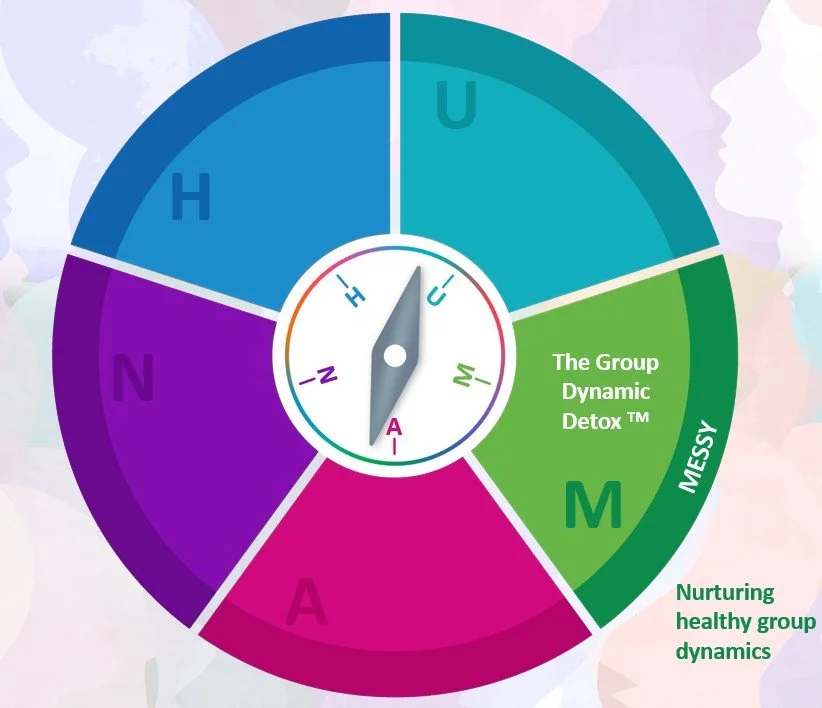
M - Messy: Working with differences and tensions to build trust, understanding and effective collaboration
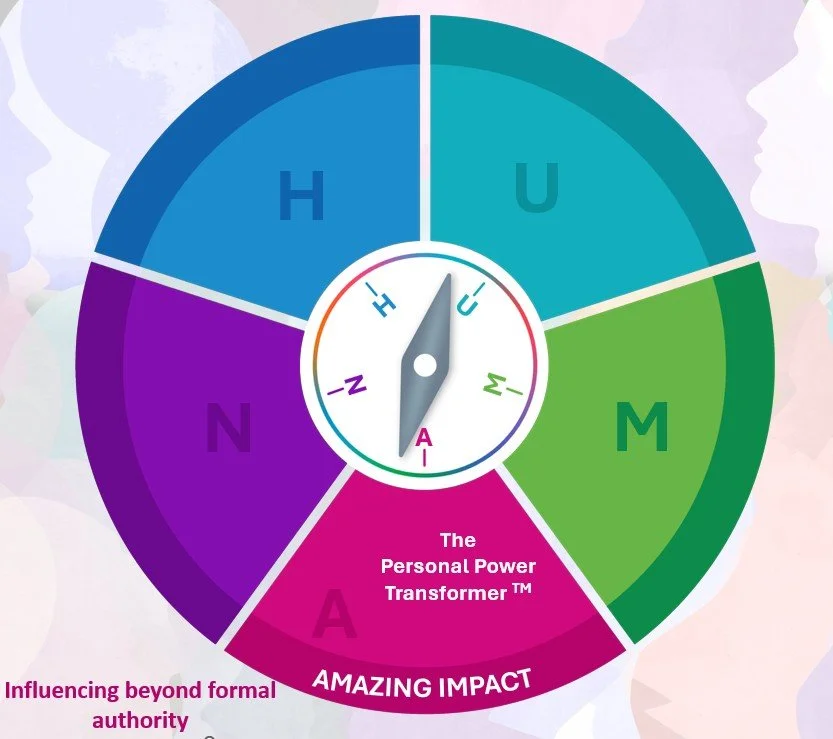
A - Amazing: Discovering how to influence more effectively, whatever your role, to create positive impact
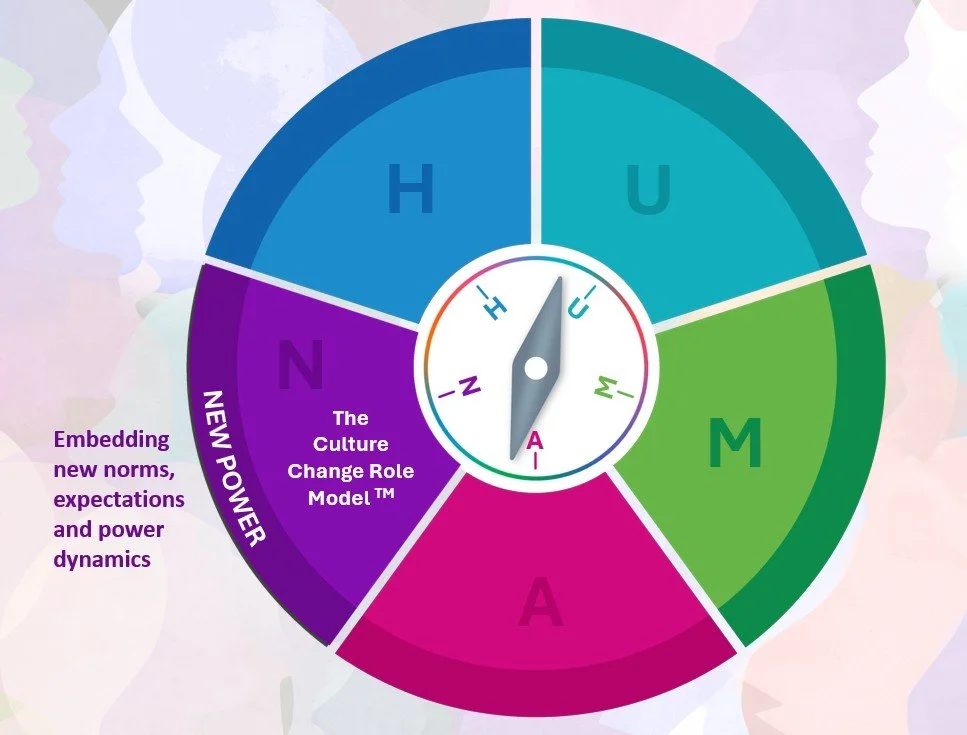
N - New: Embedding healthier ways of working, setting clearer boundaries, shared expectations and using power with others, not over them.
-
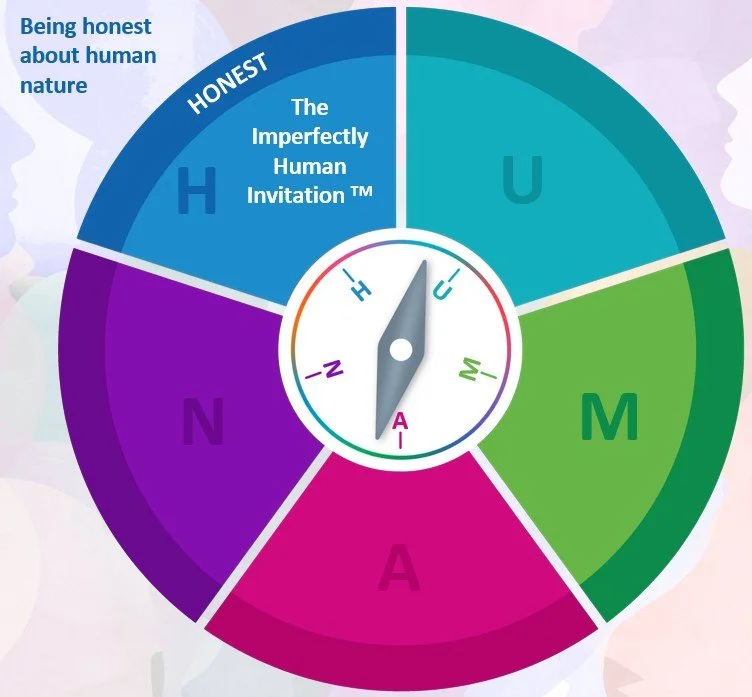
Many workplace culture problems come down to how honesty and trust operate day to day.
Honesty at work matters because trust breaks down when maintaining reputation or appearances becomes more important than telling the truth.
This often creates a Pattern of Pretence, where:people don’t fully trust each other
reality is filtered or “polished”
important issues are avoided
everything appears fine on the surface, but isn’t
-
Improving honesty at work starts with recognising how everyday behaviour contributes to a Pattern of Pretence, often unintentionally.
In practice, this involves:
understanding how people behave under pressure or uncertainty
recognising your own role in team dynamics
communicating with Humble Honesty, not avoidance or bluntness
breaking patterns of pretence and creating more open, real conversations
supporting people more effectively through change
-
When honesty improves at work, trust, communication and team performance improve.
This leads to:
stronger, more trusting working relationships
clearer, faster and better decision-making
more open and effective communication
greater accountability through transparent conversations
higher engagement and collaboration across teams

-
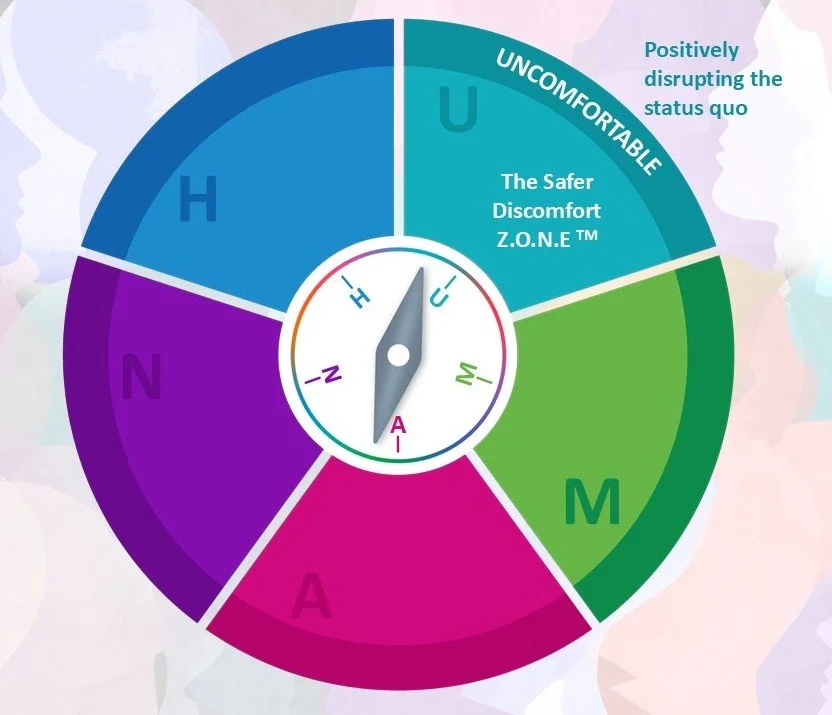
Safe Discomfort is the ability to engage in uncomfortable conversations and challenges at work, even when they feel difficult or uncertain.
Unlike psychological safety, which is often interpreted as something leaders can create for others, Safe Discomfort recognises that a feeling of safety comes from within each individual.
It shifts the focus:
from trying to “make people feel safe”
to helping people become less afraid of their own discomfort
The question becomes: How can we, as colleagues, feel the discomfort and have the conversation anyway?
-
You don’t need to feel safe to have an honest conversation. You need to be willing to stay with the discomfort.
Safe Discomfort matters because meaningful change, honest conversations and better decisions only happen when people are willing to move beyond their comfort zone — without waiting to feel completely safe.In many workplaces:
difficult conversations are avoided because they don’t feel safe
attempts to create psychological safety lead to over-cautiousness
people tiptoe around sensitive issues
challenge, when it happens, feels threatening or confrontational
This limits progress, trust and team effectiveness.
-
Safe Discomfort means creating the conditions where people can speak honestly, challenge ideas and explore differences — while also building capacity to tolerate discomfort.
In practice, this involves:
recognising fear-based behaviours and the need to fit in
understanding and discussing what feels unsafe, and why
using Curious Challenge instead of confrontation
using Verbal Protectors to open up sensitive conversations
practising Courageous Compassion
enabling all voices to be heard
naming and addressing what feels undiscussable
-
When teams practise Safe Discomfort, they become more willing and able to engage in difficult conversations, even when they don’t feel fully comfortable or “safe”.
This leads to:
raising and working through knotty issues skilfully, rather than avoiding them
having conversations with candour, consideration and care, even under pressure
confidence to explore differences without escalation, argument or withdrawal
speaking up with integrity on business-critical issues, even when it feels uncomfortable
modelling more open, honest and effective meetings and discussions
Instead of waiting to feel safe, teams learn how to stay present in discomfort — and work through what really matters together.
-
Group dynamics matter because most workplace culture problems are not caused by individuals, but by patterns of interaction between people.
At work, people depend on each other to communicate, collaborate and deliver results. But under pressure, teams often fall into predictable, unhealthy patterns.
Unhealthy group dynamics can:
create tension, conflict, resentment and blame
lead to stress, burnout and high team turnover
reduce trust and cooperation
block progress, innovation and performance
When group dynamics break down, even hard-working, well-intentioned individuals struggle to work effectively together.
-
Real, everyday teamwork is not smooth or perfect - it can often be very messy! It involves differences, misunderstandings and pressure. The key is learning how to work through these constructively.
Healthy Group Dynamics means building ways of working that can handle the mess, not avoid it.
In practice, this involves:
recognising how teams fall into tense or reactive patterns under pressure
understanding and working with differences, rather than avoiding them
developing practical skills for handling conflict and difficult interactions
embedding compassion, respect and empathy into everyday teamwork
considering others’ perspectives, even when you disagree
reducing unhelpful workplace “drama” and focusing on what matters
working more effectively with people you find difficult or challenging
-
Healthy teams aren’t the ones without problems. They’re the ones that know how to work through them.
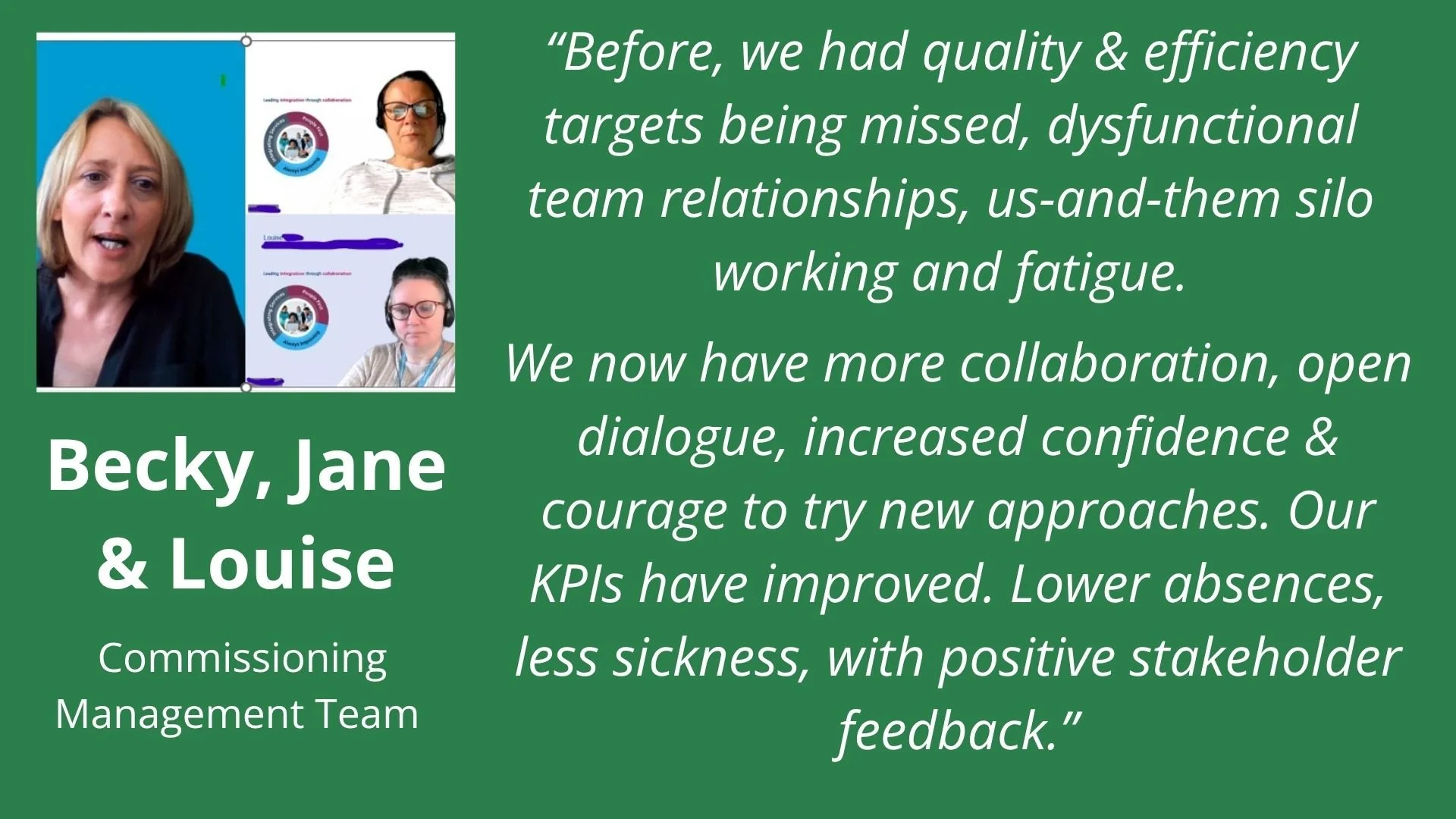
When teams develop Healthy Group Dynamics, they become more effective at working through challenges together, rather than getting tangled up or stuck
This leads to:
quicker, more effective collaboration and decision-making
a more engaged, enjoyable team environment
stronger trust and confidence between team members
greater mutual support, especially during pressure or change
more openness to ideas, innovation and initiative
faster, more responsive outcomes for clients and customers
Instead of avoiding the mess that often comes with teamwork, people have the skills to work within it — and make it productive.
-
Personal Power matters because influence at work is often overly associated with seniority or formal authority.
When people believe they need formal authority, seniority or a title to have impact, it can lead to:
feeling powerless or frustrated
struggling to have ideas heard or taken seriously
self-doubt, imposter syndrome and lack of confidence
over-reliance on ineffective “carrot and stick” approaches
missed opportunities to engage, influence and energise others
As a result, leaders and team members underuse their ability to positively shape outcomes, relationships and culture.
-
Personal Power is how you influence what happens next, regardless of your role. You don’t need more authority to have more influence and impact. You need to use your power differently.
In practice, this involves:
recognising where you give away or limit your own power at work
understanding who you could influence more effectively, and how to do this
developing new skills to inspire, engage and involve people in change
building confidence to be more authentically yourself at work
working beyond self-doubt and imposter syndrome
influencing through connection, not control
-
When people use their Personal Power effectively, influence becomes more distributed, positive and impactful across the organisation.
This leads to:
more innovation, ideas and initiative from across the team
a stronger sense of shared purpose and ownership
more energy and focus on what matters most
more engaging, purposeful meetings and conversations
greater confidence to act, contribute and lead at all levels
Instead of relying solely on authority, people learn to influence through trust, clear purpose and connection — creating more supportive, effective ways of working, even in challenging situations.

-
Culture doesn’t change until power dynamics change.
Power dynamics at work shape how decisions are made, how people behave and how teams perform.In many workplaces, power is still associated with control (Old Power).
This often results in:micromanagement of people and teams
problems being escalated up the hierarchy
lack of initiative and accountability
overloaded, stressed managers and leaders
disempowered teams feeling undervalued or “done to”
slow, risk-averse decision-making
fear of failure and low trust
missed opportunities for innovation
burnout and disengagement
Healthier workplace culture depends on shifting how power is used in everyday interactions.
This is New Power and it’s behaviour, not theory:less power over others
more power with others
-
Embedding New Power is practical, actionable work. It means changing the everyday patterns of how power is used across leaders, teams and organisations.
In practice, this involves:
recognising where controlling or reactive patterns show up, often unintentionally
acknowledging the gap between good intentions and everyday behaviour
closing the Say–Do Gap to more consistently “walk the talk”
identifying where boundaries are unclear or avoided, and the risks this creates
using practical tools such as the Menu of Yes™ to set and maintain healthier boundaries
shifting from gripping, fixing and criticising to sharing, convening and partnering
-
When teams and leaders use New Power, expectations become clearer, accountability strengthens and trust grows.
This leads to:
more adult-to-adult interactions across teams
shared responsibility for problems and outcomes
increased initiative and collaboration at all levels
more effective, joint decision-making
greater openness to ideas, innovation and problem-solving
higher engagement and participation in improvement
a stronger culture of coaching, inquiry and learning
faster, more flexible responses to change and new challenges
Instead of relying on control, organisations work through shared responsibility, clarity and partnership
